Western Dressage and the Science of Riding Smart After 50
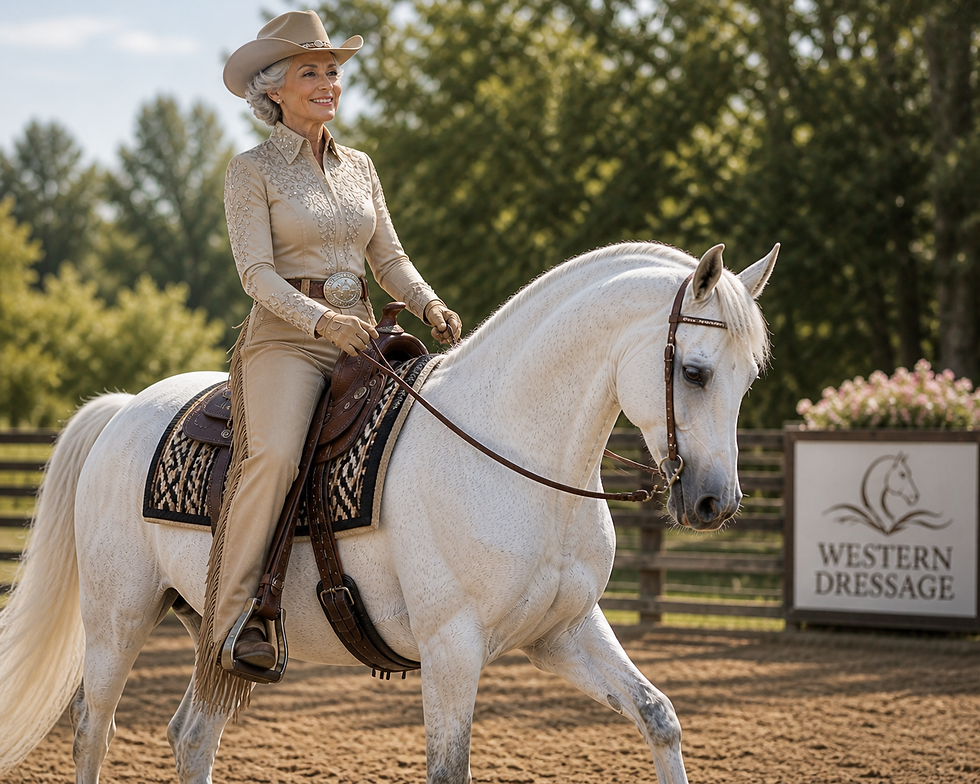
There is a moment that many riders over fifty know well. You are standing at the rail of a show, watching younger competitors move through their tests with what feels like effortless confidence, and somewhere quietly in the back of your mind a question surfaces that nobody around you is saying out loud: is there still a place in this sport for me? Maybe the lope has started to feel like a negotiation rather than a joy. Maybe you came back to horses after a long absence and you are rebuilding from the ground up, at an age when rebuilding feels more complicated than it used to. Maybe you have never competed at all, and you are standing at the edge of something that looks wonderful but also, honestly, a little frightening. Whatever brought you to that rail, the research is increasingly clear and the equestrian community is slowly catching up to what it says: not only is there a place for you in Western Dressage, but the science suggests that riding, and competing, may be one of the most profoundly beneficial things a person over fifty can do for their brain, their body, and their sense of self.
The fifty-plus rider demographic is not a fringe population in the equestrian world. It represents one of the fastest-growing, most financially invested, and most consistently present segments of the horse community, one that brings time, deep personal motivation, and a quality of commitment that is genuinely different from what competition looks like at twenty-five. The traditional show structure has not always kept pace with what this group actually needs, but Western Dressage is changing that conversation, and what is emerging is something worth understanding clearly. Riders 50 and over who are active in competitive sport report high levels of autonomous motivation, meaning they participate because it is personally meaningful rather than because of external pressure, and research consistently shows this form of motivation is the strongest predictor of long-term engagement and well-being in physical activity (Palombi et al., 2025). That matters, because it tells us these riders are not looking for a shortcut. They are looking for a structure that respects what they are actually capable of.
The promise of a safer body, a sharper mind, and a stronger sense of self is not marketing language. It is what the research on older adults and complex physical activity actually supports, and Western Dressage delivers on all three in ways that deserve to be named directly. Riding is classified by researchers as a complex dual-task motor activity, meaning it demands simultaneous physical coordination and cognitive engagement in ways that few other activities can match. A network meta-analysis of 87 trials in healthy adults over 65 found that cognitive-motor dual-task training produced the strongest cognitive benefits compared to control conditions and consistently outperformed traditional physical training alone (Cazzolli et al., 2026). Studies examining these programs in older adults have shown improvements in global cognition, executive function, memory, and gait that exceed what single-task exercise produces (Jardim et al., 2021; Yi et al., 2024). What you are doing every time you ride a Western Dressage test is not simply exercise. Every transition, every geometry of the pattern, every moment of reading your horse's response and adjusting your aids in real time, all of it is, neurologically speaking, considerably more sophisticated than a walk around the block. Research further shows that combined cognitive-motor programs produce measurable changes in resting-state functional connectivity within prefrontal and motor circuits, indicating genuine neural reorganization over time (Gallou-Guyot et al., 2023). The belt buckle at the end of the year is a bonus. The brain benefits are happening on every ride.
Balance deserves equal attention here, and not only because it matters for staying safely in the saddle. The postural adjustments required to follow a horse's movement at the walk and jog continuously engage the deep stabilizing muscles of the core and stimulate the vestibular system in ways that directly support fall prevention in daily life. Balance-focused physical training is among the most effective fall-risk reduction strategies available to older adults, with well-designed programs producing fall-risk reductions in the range of 18 to 34 percent (Wiedenmann et al., 2023). Research on programs that combine balance demands with cognitive engagement, which is precisely what a Western Dressage test requires, shows additional benefits for postural control and dynamic balance beyond what physical training alone produces (Chen et al., 2021). For adults over fifty, where deteriorating balance is a leading contributor to serious injury, the physical dimension of riding is not incidental. It is clinically meaningful, and it compounds with every consistent, attentive ride.
The Memory Question Nobody Asks Out Loud
There is one thing many older riders quietly worry about and rarely say out loud, and that is memorizing the test. The concern is real and it deserves an honest response rather than a cheerful dismissal. Working memory, the system responsible for holding and manipulating information in the short term, does show measurable changes with age, and retrieving a sequence of movements under the mild pressure of performance can feel harder than it did at thirty. What the research actually shows, though, is considerably more encouraging than the worry suggests, and understanding the distinction between different memory systems can change how you approach preparation entirely.
Procedural memory, the kind that governs learned movement sequences, appears to be largely age-invariant in its consolidation over time. A study examining lifespan developmental patterns in procedural learning found no significant difference in memory consolidation across ages 7 to 76, suggesting that the motor learning system remains remarkably resilient well into later life (Toth-Faber et al., 2023). Research on older adults learning complex locomotor sequences found that they could acquire and retain stepping patterns with performance gains comparable in rate to younger adults, and that implicit sequence learning, the kind that builds through physical repetition rather than conscious memorization, was often well-preserved and could even benefit under conditions that reduced reliance on deliberate cognitive strategies (Johannsen et al., 2022; Wang et al., 2022). One-week retention of upper-extremity motor skills has also been shown to be robust in nondemented older adults, with visuospatial memory predicting stronger retention of motor patterns over time (VanGilder et al., 2022).
What this means practically is that the most effective strategy for memorizing a Western Dressage test is not reviewing the written test at the kitchen table until it feels logical. It is riding it, repeatedly, in your body, in your arena, with your horse, until the pattern lives in your legs and hands and seat rather than only in your head. The more you rehearse the physical sequence on horseback, the more deeply it is encoded in procedural memory, which is the same system that allows a musician to play something they learned forty years ago without consciously retrieving each note. That system does not age the way working memory does. Riders who understand this tend to approach preparation differently and feel considerably less anxious once they realize the memorization challenge can be largely resolved through the most natural tool available. It is also worth noting that the cognitive challenge of learning and retaining test patterns, practiced consistently and progressively across a show season, is itself a form of the mental exercise that research associates with cognitive resilience over time (Dhahbi et al., 2025). The Western Dressage test structure, building from Intro through Basic and beyond, is not just a competitive progression. It is, whether designed this way intentionally or not, a well-calibrated cognitive training ladder.
Fear Is Real, and It Deserves Respect
It would be dishonest to write about older adult riders without addressing fear directly, because it is far more common in this population than the show world tends to acknowledge, and far more understandable than the culture of competitive riding sometimes allows people to admit. Research consistently identifies fear of falling and fear of injury as among the strongest predictors of activity avoidance in adults over sixty, operating independently of actual fall history and powerfully shaping whether someone chooses to engage or quietly step away (Kilgour et al., 2024; Meredith et al., 2023). Perceived vulnerability and risk of injury reduce confidence and lead to avoidance, particularly after a previous difficult experience, and these responses cluster with low perceived physical competence and low self-efficacy in ways that reinforce each other over time (Tabacchi et al., 2025; Chen et al., 2025). Older adults will rarely say "I'm scared" in a barn setting. The fear tends to live in private, in the hesitation before mounting, in the way a lope that used to feel natural now comes with a running internal calculation of risk. This is not weakness. It is a neurologically real response that deserves thoughtful structure rather than a nudge to push through it.
Self-efficacy, meaning the genuine belief in one's own capacity to manage a challenge safely, is one of the strongest predictors of sustained engagement with demanding physical activities in older adults (Safavi et al., 2025; Gao et al., 2025). Research on graded exposure, the process of progressive, structured re-engagement with feared activities under manageable conditions, shows consistent reductions in fear across physical, psychological, and performance contexts when the approach is carefully calibrated to the individual's current threshold (Sheng et al., 2025; Nicklen et al., 2025). What this tells us is that the path back into competition is not built through willpower. It is built through environments that preserve the real challenge while thoughtfully removing the variables that make the risk feel unmanageable. Research using acceptance and commitment-informed approaches has also shown that connecting re-engagement steps to personally valued goals, in this case the ongoing relationship with a horse, the satisfaction of mastery, the sense of community in the Western Dressage world, significantly supports confidence building and sustained adherence (Farris & Kibbey, 2022). You are not opting out when you choose a pathway that respects where your body and nervous system are. You are opting smart.

Walk/Trot Advanced: Real Competition, Adjusted Risk
Western Dressage Walk/Trot Advanced is coming, potentially as early as next year, and it is worth understanding clearly what it represents and what it does not. The idea grew from a proposal to the WDAA specifically focused on riders over seventy who wanted to compete seriously but found the lope to be a barrier for physical, confidence-related, or safety reasons. What the WDAA did with that idea reflects something genuinely thoughtful about the organization: they opened it to everyone. Walk/Trot Advanced is not a senior-only division, not a consolation category, and not a beginner pathway with a different label. It is a legitimate, technically demanding competitive pathway available to any horse and rider who needs or chooses it, built on the recognition that the lope is a barrier for far more people than age alone explains, and that removing it does not reduce the sophistication of the horsemanship. It changes the risk profile. The quality of the work remains entirely intact.
Looking at what the USEF describes for Advanced Walk/Trot, this level asks the rider to demonstrate a more sophisticated understanding of the aids and correct position. The horse is expected to show improved balance, the beginnings of engagement in the jog, genuine suppleness through the topline, and a harmonious, soft performance throughout. That is real Western Dressage, evaluated by credentialed judges using the same standards applied across all recognized competition. For the rider who has spent years building feel, timing, and the kind of quiet communication that only comes from a sustained partnership with a horse, this division offers technically rich and deeply satisfying work that stands entirely on its own. The structure supports what researchers describe as mastery goal orientation, the internal drive to develop genuine competence and demonstrate real growth, which is consistently identified as one of the most durable and psychologically healthy forms of competitive motivation available to older adults (Palombi et al., 2025; Xiang et al., 2026). You are not done when you arrive here. You are, in many meaningful ways, getting more precise.
The division is designed to function as both a destination and a bridge, and that flexibility matters psychologically in ways that go beyond convenience. For riders who never want to lope again for any reason, it is a permanent competitive home where serious work is recognized seriously. For riders rebuilding after time off, injury, or illness, it is a structured re-entry point with real challenge and without the most fear-laden element of traditional competition. Research on inclusive structures in later-life physical activity consistently finds that environments offering meaningful roles, peer-appropriate challenge, and genuine belonging, rather than tokenistic accommodations, are what actually sustain participation and protect well-being over time (Von Humboldt et al., 2024; Palombi et al., 2025). Walk/Trot Advanced, embedded in the WDAA competitive structure with all of its points programs, year-end recognition, and credentialed judging, is not an accommodation. It is an intelligent structural design that extends the competitive lifespan of riders who have decades of experience and investment in the sport and who deserve a framework that honors that.
Online Showing and the Architecture of Re-Entry
Online Western Dressage showing extends the principle of manageable challenge further into the daily lives of older riders, and it deserves more credit than it typically receives for what it does psychologically. Recording a Western Dressage test in your own familiar arena, with your own horse, on a morning when everything feels right, removes the layers of environmental unpredictability that can take an already cautious rider and push them well past the threshold where skilled performance is possible. Research on performance environments for older adults consistently finds that low-pressure, autonomy-supportive, and self-paced contexts produce lower anxiety, greater flow states, better access to trained motor patterns, and more sustained engagement over time (Su et al., 2025; Schaumburg et al., 2025). The familiar environment also matters at the neurobiological level: when both horse and rider are in a known, safe context, the nervous system remains regulated in ways that simply are not possible in the unpredictability of an unfamiliar showground, and that regulation is what allows the training that has been built quietly at home to actually show up in the test.
What is worth understanding clearly is that online showing does not remove the psychological work of performance. It calibrates it. The evaluation is real, the judges are USEF-licensed carrying "R" or "Sr" credentials, the scores count toward national WDAA points programs, and the YEHP program, which is completely free to join, tracks those scores across the year with a genuine belt buckle waiting for top performers in each division. What online showing removes are the destabilizing variables: the unfamiliar barn, the charged warm-up atmosphere, the social comparison that triggers what researchers call evaluation apprehension, the cognitive overload of managing too many environmental stressors simultaneously. Research on fear-reduction approaches consistently identifies this kind of partial exposure, preserving the core feared stimulus of evaluation while removing non-essential amplifiers, as among the most effective structures for reducing anxiety and building sustained confidence over time (Sheng et al., 2025; Nicklen et al., 2025). For the older rider who has been standing at the edge of competition, online showing paired with Walk/Trot Advanced creates a re-entry architecture that is psychologically sound, not merely logistically convenient.
Identity, Meaning, and the Refusal to Shrink
There is a dimension to all of this that goes beyond technique and test scores, and I find it worth naming directly because it tends to be the part that resonates most when people finally hear it said clearly. Engaging in a skill-based, cognitively demanding discipline in later life does something to the sense of self that cannot be measured by a judge's scoresheet but that research consistently identifies as central to well-being across the second half of life. Physical activity in later life has been shown to predict higher autonomous values, greater self-assurance, and stronger meaning in life, with meaning in life functioning as a central bridge between sustained activity and psychological well-being (Xiang et al., 2026). Research on older adults in creative and skill-based disciplines finds consistent themes of challenging internalized perceptions of aging, exercising genuine autonomy, and demonstrating psychosocial resilience through continued mastery of something difficult and beautiful (Martin-Wylie et al., 2022). Community engagement in skill-based activities has been linked to personal growth and the active adoption of a growth mindset even in the presence of physical and cognitive challenges (Dhokai et al., 2023).
There is also something meaningful in what research identifies as the social architecture of sustained engagement. Older adults who successfully re-engage in demanding skill-based activities tend to hold a growth-oriented, capable self-view, and they tend to flourish in environments where peers and instructors help them recognize their own progress and buffer inevitable setbacks (Dhokai et al., 2023; Meredith et al., 2023; Zimmer et al., 2022). Inclusive structures that reduce perceived ageism, offer meaningful roles, and create genuine belonging rather than marginal accommodation are consistently associated with stronger motivation, better retention, and greater psychological well-being in older adult participants (Von Humboldt et al., 2024; Palombi et al., 2025). The WDAA community, at its best, is exactly that kind of structure. And Walk/Trot Advanced, accessible through online showing, supported by the YEHP points program, and open to any rider who needs or chooses it, makes entry into that community more genuinely available than it has ever been.
The cultural narrative after fifty can press toward contraction, toward asking less of your body, less of your competitive life, less of your sense of what is still possible. Choosing to ride with intention, to submit your work to credentialed evaluation rated WDAA judges with valuable feedback, to accumulate scores toward a year-end standing that carries real recognition, is a quiet refusal of that narrative. It says, in the language of action rather than words, that learning is still happening here, that this partnership is still being built, and that the years between fifty and eighty+ are not a winding down of the riding life but a deepening of it. The journey, as the WDAA has always said, is the point. And for riders over fifty, the research suggests rather strongly that the journey is only getting more interesting.
References
Cazzolli, B., Chirico, A., Stefanelli, F., Zacchilli, M., Cavicchiolo, E., Alivernini, F., & Lucidi, F. (2026). Optimizing cognitive functions in healthy older adults: A network meta-analysis of dual- and single-task interventions. GeroScience. https://doi.org/10.1007/s11357-025-02091-w
Chen, Y., Shah, S., Chen, Y., Owen, A., Ekegren, C., Ilic, D., & Gasevic, D. (2025). Barriers to and facilitators of physical activity among community-dwelling older adults: A systematic review. BMJ Open, 15. https://doi.org/10.1136/bmjopen-2024-095260
Chen, Y., Zhang, Y., Guo, Z., Bao, D., & Zhou, J. (2021). Comparison between the effects of exergame intervention and traditional physical training on improving balance and fall prevention in healthy older adults: A systematic review and meta-analysis. Journal of NeuroEngineering and Rehabilitation, 18. https://doi.org/10.1186/s12984-021-00917-0
Dhahbi, W., Briki, W., Heissel, A., Schega, L., Dergaa, I., Guelmami, N., Omri, A., & Chaabene, H. (2025). Physical activity to counter age-related cognitive decline: Benefits of aerobic, resistance, and combined training. Sports Medicine Open, 11. https://doi.org/10.1186/s40798-025-00857-2
Dhokai, N., Matto, H., Ihara, E., Tompkins, C., Caswell, S., Cortes, N., Davis, R., Coogan, S., Fauntroy, V., Glass, E., Lee, J., Baraniecki-Zwil, G., & Ambegaonkar, J. (2023). Community arts engagement supports perceptions of personal growth in older adults. Journal of Aging Studies, 66, 101142. https://doi.org/10.1016/j.jaging.2023.101142
Farris, S., & Kibbey, M. (2022). Be brave, BE-FIT! A pilot investigation of an ACT-informed exposure intervention to reduce exercise fear-avoidance in older adults. Cognitive Behaviour Therapy, 51, 273-294. https://doi.org/10.1080/16506073.2022.2037017
Gallou-Guyot, M., Mandigout, S., Marie, R., Robin, L., Daviet, J., & Perrochon, A. (2023). Feasibility and potential cognitive impact of a cognitive-motor dual-task training program using a custom exergame in older adults. Frontiers in Aging Neuroscience, 15. https://doi.org/10.3389/fnagi.2023.1046676
Gao, H., Liu, J., Zhou, J., Zhou, Y., Song, K., Lyu, S., Yang, X., & Qin, Y. (2025). The mediating role of physical activity self-efficacy between knowledge, psychological factors, and early physical activity in elderly post-PCI patients. BMC Geriatrics, 25. https://doi.org/10.1186/s12877-025-06785-w
Jardim, N., Bento-Torres, N., Costa, V., Carvalho, J., Pontes, H., Tomas, A., Sosthenes, M., Erickson, K., Bento-Torres, J., & Diniz, C. (2021). Dual-task exercise to improve cognition and functional capacity of healthy older adults. Frontiers in Aging Neuroscience, 13. https://doi.org/10.3389/fnagi.2021.589299
Johannsen, L., Friedgen, E., Stephan, D., Batista, J., Schulze, D., Laurentius, T., Koch, I., & Bollheimer, L. (2022). Keeping in step with the young: Chronometric and kinematic data show intact procedural locomotor sequence learning in older adults. PLOS ONE, 17. https://doi.org/10.1371/journal.pone.0266733
Kilgour, A., Rutherford, M., Higson, J., Meredith, S., McNiff, J., Mitchell, S., Wijayendran, A., Lim, S., & Shenkin, S. (2024). Barriers and motivators to undertaking physical activity in adults over 70: A systematic review of the quantitative literature. Age and Ageing, 53. https://doi.org/10.1093/ageing/afae080
Martin-Wylie, E., Urmston, E., & Redding, E. (2022). Impact of creative dance on subjective well-being amongst older adults: An arts-informed photo-elicitation study. Arts & Health, 16, 15-31. https://doi.org/10.1080/17533015.2022.2156562
Meredith, S., Cox, N., Ibrahim, K., Higson, J., McNiff, J., Mitchell, S., Rutherford, M., Wijayendran, A., Shenkin, S., Kilgour, A., & Lim, S. (2023). Factors that influence older adults' participation in physical activity: A systematic review of qualitative studies. Age and Ageing, 52. https://doi.org/10.1093/ageing/afad145
Nicklen, B., Delbaere, K., & Ellmers, T. (2025). Existing psychological interventions addressing concerns about falling in older adults: A scoping review. Age and Ageing, 54. https://doi.org/10.1093/ageing/afaf281
Palombi, T., Chirico, A., Cazzolli, B., Zacchilli, M., Alessandri, G., Filosa, L., Borghi, A., Fini, C., Antoniucci, C., Pistella, J., Alivernini, F., Baiocco, R., & Lucidi, F. (2025). Motivation, psychological needs and physical activity in older adults: A qualitative review. Age and Ageing, 54. https://doi.org/10.1093/ageing/afaf180
Safavi, S., Sadeghi, R., Jamshidi, E., Tedadi, Y., Yaseri, M., Shati, M., Bakhshi, F., & Rahbar, A. (2025). The association between self-efficacy and social support with physical activity in older adults. Scientific Reports, 15. https://doi.org/10.1038/s41598-025-20717-z
Schaumburg, M., Imtiaz, A., Zhou, R., Bernard, M., Wolbers, T., & Segen, V. (2025). Immersive virtual reality for older adults: Challenges and solutions in basic research and clinical applications. Ageing Research Reviews, 109. https://doi.org/10.1016/j.arr.2025.102771
Sheng, Y., Wang, C., Wang, Y., Pan, L., Zhang, M., Liu, D., & Gao, W. (2025). An umbrella review of physical-activity therapy and cognitive behavioral therapy in reducing fear of falling among community-dwelling older adults. Frontiers in Public Health, 12. https://doi.org/10.3389/fpubh.2024.1498451
Su, P., Jiang, K., & Kong, J. (2025). Flow in choral singing: Associations with perceived choral memory performance and well-being among older adults. BMC Psychology, 13. https://doi.org/10.1186/s40359-025-03276-w
Tabacchi, G., Navarra, G., Scardina, A., Thomas, E., D'Amico, A., Gene-Morales, J., Colado, J., Palma, A., & Bellafiore, M. (2025). A multiple correspondence analysis of the fear of falling, sociodemographic, physical and mental health factors in older adults. Scientific Reports, 15. https://doi.org/10.1038/s41598-025-89702-w
Toth-Faber, E., Nemeth, D., & Janacsek, K. (2023). Lifespan developmental invariance in memory consolidation: Evidence from procedural memory. PNAS Nexus, 2. https://doi.org/10.1093/pnasnexus/pgad037
VanGilder, J., Bergamino, M., Hooyman, A., Fitzhugh, M., Rogalsky, C., Stewart, J., Beeman, S., & Schaefer, S. (2022). Using whole-brain diffusion tensor analysis to evaluate white matter structural correlates of delayed visuospatial memory and one-week motor skill retention in nondemented older adults. PLOS ONE, 17. https://doi.org/10.1371/journal.pone.0274955
Von Humboldt, S., Costa, A., Ilyas, N., & Leal, I. (2024). Older adults, perceived ageism, civic participation and mental health: A qualitative study. Aging & Mental Health, 28, 1489-1501. https://doi.org/10.1080/13607863.2024.2348611
Wang, T., Martinez, M., Festa, E., Heindel, W., & Song, J. (2022). Age-related enhancement in visuomotor learning by a dual-task. Scientific Reports, 12. https://doi.org/10.1038/s41598-022-09553-7
Wiedenmann, T., Held, S., Rappelt, L., Grauduszus, M., Spickermann, S., & Donath, L. (2023). Exercise-based reduction of falls in community-dwelling older adults: A network meta-analysis. European Review of Aging and Physical Activity, 20. https://doi.org/10.1186/s11556-023-00311-w
Xiang, L., Yang, J., Gou, H., & Hu, C. (2026). The dynamic relationship between physical activity and psychological well-being in Chinese older adults. Frontiers in Public Health, 13. https://doi.org/10.3389/fpubh.2025.1736019
Yi, Q., Liu, Z., Zhong, F., Selvanayagam, V., & Cheong, J. (2024). Cognitive and physical impact of combined exercise and cognitive intervention in older adults with mild cognitive impairment: A systematic review and meta-analysis. PLOS ONE, 19. https://doi.org/10.1371/journal.pone.0308466
Zimmer, C., McDonough, M., Hewson, J., Toohey, A., Din, C., Crocker, P., & Bennett, E. (2022). Social support among older adults in group physical activity programs. Journal of Applied Sport Psychology, 35, 658-679. https://doi.org/10.1080/10413200.2022.2055223


Comments